Showing posts sorted by relevance for query chamomile. Sort by date Show all posts

Monday, 26 May 2014

Keep Calm and Pick Some Chamomile!

One of the things I love about living in Bulgaria is the abundance of herbs that are literally bursting out of the pavements here. This time of year the wild larder is stocked high with so many wonderful plants, this morning my attention was taken by Chamomile.

Every year we harvest this plant and dry it for a supply of herbal teas. The first time I collected chamomile I was confused in trying to identify the plant . Browsing through herb books to look up the herb I found many names, both common and scientific. First of all the word chamomile is sometimes spelled camomile then there’s Roman (or English) chamo­mile, a perennial, and German (or Hungarian) chamomile, an annual. The German species might be listed as Matricaria chamomilla, Chamomilla recutita, or Matricaria recutita. Roman chamomile is referred to in some sources as Anthemis nobilis, in others as Chamaemelum ­nobile. To be bring some clarity to this issue I present the following.


The currently accepted nomenclature is  
  • Matricaria recutita - German Chamomile, the annual
  • Chamaemelum nobile - Roman Chamomile, the perennial.  
The plant growing in abundance around our house is Matricaria recutita - German Chamomile. 


Telling Chamomile Species Apart

An easy way to distinguish the Chamaemelum nobile- Roman from  Matricaria recutita - German is by splitting the flower receptacle open down the middle. If the recep­tacle is solid, it is Chamaemelum nobile - Roman; if hollow, it is Matricaria recutita - German. You should test five or ten flowers to be sure, because ­occasionally a German chamomile flower will be solid in the interior.

Matricaria recutita - German Chamomile

Roman chamomile has slightly hairy stems, while those of the ­German are smooth. In the live plant, the flowers of Roman chamomile sit singly atop the stem, while those of the German are on divided stems in a comb-like arrangement (known as a corymb).

Plant Descriptions

Matricaria recutita - German Chamomile is a sweet-scented, branching plant whose tiny leaves are twice-divided into thin linear segments. The flowers, up to one inch across, have a hollow, cone-shaped receptacle, with tiny yellow disk flowers covering the cone. The cone is surrounded by 10 to 20 white, down-curving ray flowers, giving it the appearance of a miniature daisy. German chamomile is native to Europe and Western Asia.

Matricaria recutita - German Chamomile

Chamaemelum nobile - Roman Chamomile, on the other hand, has a spreading habit and grows only about a foot high. Leaves are twice or thrice divided into linear segments, which are flatter and thicker than those of German chamomile. Its flowers are also up to 3cm across, but its disk is a broader conical shape, and the receptacle is solid.
Chamaemelum nobile - Roman Chamomile
A quick intermission just to let you know we've revamped our Online Store where you can find Forest Garden/ Permaculture Plants, Seeds, Cuttings, Bulbs, Rhizomes and Polyculture Multi-packs along with digital goods and services such as Online Courses, Webinars, eBooks, and Online Consultancy and finally we've added a Bulk Fruit and Nut Tree order form for Farms, Orchards, Nurseries, and Large Regenerative Landscape Projects. If there is anything in the store you would like to see but is not there, please let us know. We hope you enjoy the store and find something you like :) It's your purchases that keep our Project going. Thank you. Enter Our Store Here

Plants, Seeds, eBooks, Consultancy, Bulk Fruit and Nut Tree Orders for Permaculture, Polyculture, Forest Gardens and Regenerative Landscapes.

Medicinal Usage  

German chamo­mile, and to a lesser extent, Roman chamomile, is among the best-researched medicinal herbs now used in Europe. It is used in a wide variety of ways and in dozens of products: compresses, rinses, or gargles are used externally for the treatment of inflammations and irritations of the skin, mouth, gums, and respiratory tract, and for hemorrhoids. A chamomile bath—450g of flowers to 75L of water—is also used.
Internally, a tea made from 2 to 3 grams of the herb to a cup of water is used to relieve spasms and inflammations of the intestinal tract, as well as for peptic ulcers. A mild tea is also used as a sleeping aid, particularly for children. These medicinal uses, cited in a monograph developed by the European Scientific Cooperative for Phytomedicine, are backed by intensive research of recent years as well as many centuries of common use.


Harvesting and Drying Chamomile  

Run your fingers through the plants catching the flowers heads as you go. I always leave a few heads on the plants, remembering the flower heads are the next generation of plants.  I lay the flower heads on trays and leave the trays in a south facing window, turning periodically to ensure an even dry. After the heads are dry, they are put into jars and stored in a dark, cool place and....voilĂ !  You have a ready supply of calm in a jar.  
     
Matricaria recutita - German Chamomile drying out

For more info on these plants click below for the Plants for Future profiles of the two species.  

Matricaria recutita - German Chamomile 
Chamaemelum nobile - Roman Chamomile


Regenerative Landscape Design - Online Interactive Course 


Want to learn how to design, build and manage regenerative landscapes?  Join us for our Regenerative Landscape Design - Online Interactive Course from May 1st to Sep 13th, 2023. 

We're super excited about running the course and look forward to providing you with the confidence, inspiration, and opportunity to design, build and manage regenerative landscapes, gardens, and farms that produce food and other resources for humans while enhancing biodiversity.

Regenerative Landscape Design Online Course

You can find out all about the course here and right now we have a 20% discount on the full enrollment fees. Just use the promo code
 RLD2023 in the section of the registration form to receive your discount. 

We are looking forward to providing you with this unique online learning experience - as far as we know, the very first of its kind. If you are thinking of reasons why you should do this course and whether this course is suitable for you, take a look here where we lay it all out. Looking forward to it!

--------------------------------------------------------------------------------------------------------------------------

We offer a diversity of plants and seeds for permaculture, forest gardens and regenerative landscapes including a range of fruit and nut cultivars. We Deliver all over Europe from Nov - March. - Give a happy plant a happy home :)


Our Bio-Nursery - Permaculture/Polyculture/ Regenerative Landscape Plants 

--------------------------------------------------------------------------------------------------------------------------

Support Our Project 


If you appreciate the work we are doing you can show your support in several ways.

  • Comment, like, and share our content on social media.
  • Donate directly via PayPal to balkanecologyproject@gmail.com or via FTX Pay


--------------------------------------------------------------------------------------------------------------------------

Design and Create Webinars - Forest Gardens, Urban Gardens, Permaculture, Regenerative Farming   


We're hosting a range of online learning sessions including how to create habitat to enhance biodiversity, how to design and build a forest garden, polyculture design software tutorials, regenerative farm, and landscape design, urban gardening and much more. If you would like to be notified when our next sessions are coming up please add your email below and hit subscribe and we'll be in touch.


You can also register for our online training, services, and products directly here.


--------------------------------------------------------------------------------------------------------------------------


Sunday, 12 May 2019

Forest Garden Plants, River Irrigation, Paulownia Coppice & Garden Bees - Week 6 - The Polyculture Project

It's been a relaxed week here in Shipka. The main focus has stayed on the market garden where we are sowing and planting out the warm season annual crops. The weather has been warm with cloudy cool spells and the wild vegetation is really starting to take off. The fruits are forming on the trees and shrubs and the promise of summer, albeit 6 weeks away, is in the air.

So here's what we've been up to this week.


But first just to let you know we've revamped our Online Store where you can find Forest Garden/ Permaculture Plants, Seeds, Cuttings, Bulbs, Rhizomes and Polyculture Multi-packs along with digital goods and services such as Online Courses, Webinars, eBooks, and Online Consultancy and finally we've added a Bulk Fruit and Nut Tree order form for Farms, Orchards, Nurseries, and Large Regenerative Landscape Projects. If there is anything in the store you would like to see but is not there, please let us know. We hope you enjoy the store and find something you like :) It's your purchases that keep our Project going. Thank you. Enter Our Store Here

Plants, Seeds, eBooks, Consultancy, Bulk Fruit and Nut Tree Orders for Permaculture, Polyculture, Forest Gardens and Regenerative Landscapes.

Ronan Delente a chef who has been travelling the world cooking across the continents has joined as for the study this year. Ronan has been experimenting with various recipes using the wild plants and perennial vegetables from the gardens. He started a blog this week to share his recipes and love for cooking with perennials. Check out his Falafel recipe here - looks very tasty!

The Forest Garden - Aponia  


It's going to be a good year for plums it seems especially the wild Prunus cerasifera - Cherry Plum that grow in abundance in our area. These plums are great, each wild tree has unique tasting plums and I reckon about 1 in 10 have the perfect amount of juiciness, sweetness and acidity that I love in these fruits.


Mespilus germanica - Medlar  is flowering. This is seedless local cultivar and provides us with great fruit from late November into December. 


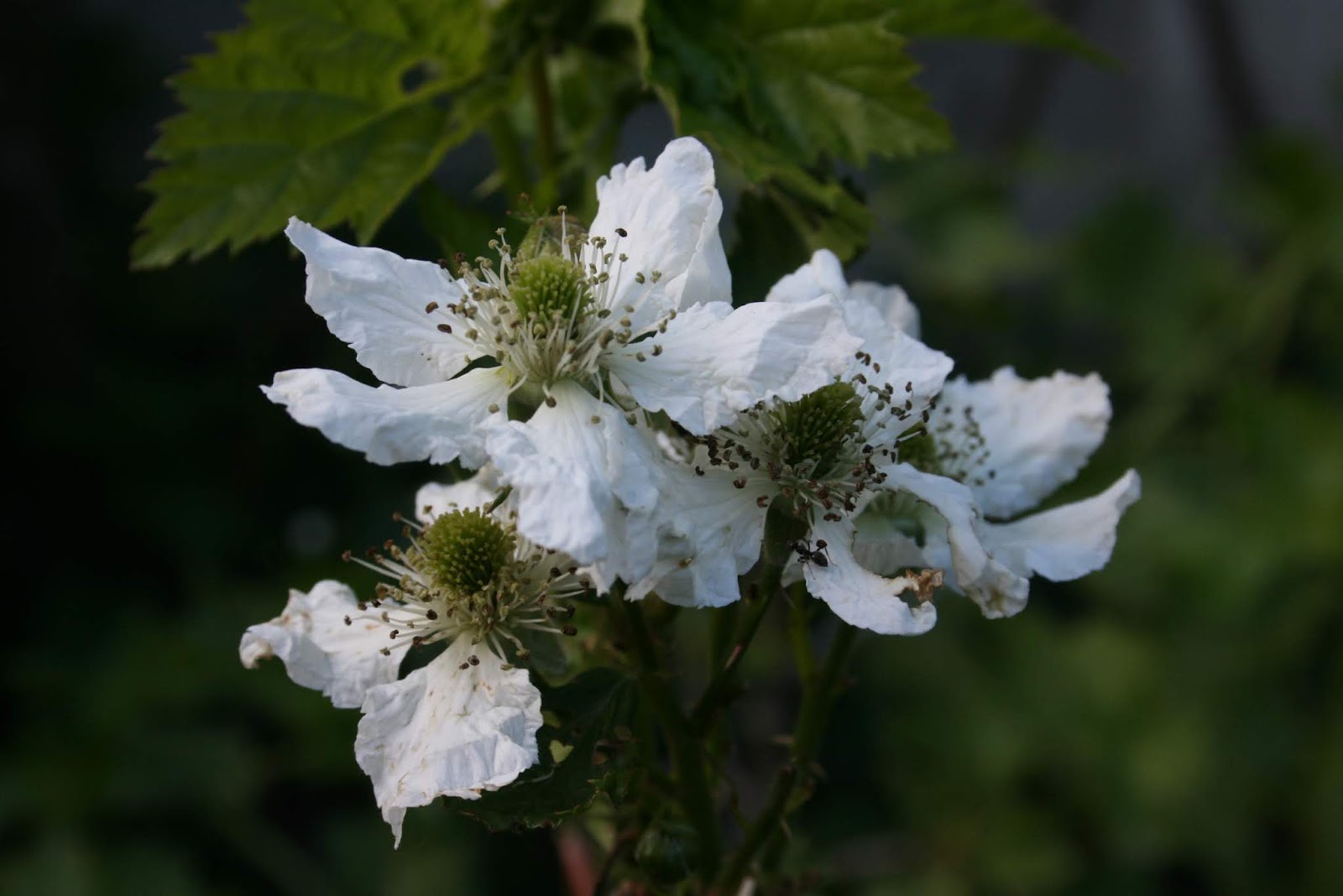
Looking forward to the fruits from this Rubus fruticosus cv. - Blackberry cultivar 'Reuben'. This cultivar is unusual for blackberry in that it produces fruit on new growth, known as a primocane. We get some great fruit from this plant in the summer and it continues to flower into late October and although the fruit does not ripen that late in the season the flowers do provide scarce forage for pollinators.


As the warmer season approaches we will be needing to irrigate the gardens. This week we went for a walk up the mountain to show the team the source of our irrigation, the river in the valley above us, and how the town diverts the river to supply water for gardens and farms in the area. 


Here's a map showing the channel we use to irrigate the market garden and home garden on the west side of town . The red markers are places where the stream can be diverted to irrigate the other gardens of the town. The end of the blue line in the bottom left hand corner is the market garden. The above photo was taken at the other end of the blue line on this map. 


For the East side gardens we use a different river .
  

I spotted the first flowering Chamomile of the season. This is one of our favourites to collect and dry for a supply of herbal teas. The first time I collected chamomile I was confused in trying to identify the plant . Browsing through herb books to look up the herb I found many names, both common and scientific. First of all the word chamomile is sometimes spelled camomile then there’s Roman (or English) chamo­mile, a perennial, and German (or Hungarian) chamomile, an annual. The German species might be listed as Matricaria chamomilla, Chamomilla recutita, or Matricaria recutita. Roman chamomile is referred to in some sources as Anthemis nobilis, in others as Chamaemelum ­nobile. I wrote a blog post years ago to help with identification. You can find it here if you are interested  


Paulownia Coppice Trials 


We've been experimenting with growing Paulownia tomentosa - Foxglove Tree in the garden. Our experiments include growing the plants in the center of our vegetable raised beds for shade and mulch, growing the plants for tipi poles, fence posts and stakes in the vegetable gardens and generally to see how much biomass these plants can produce in the polyculture garden.  

Here is a photo of Paulownia tomentosa - Foxglove Tree  used for shade support in our vegetable polycultures. This photo was taken in the summer of 2016 just 3 months after planting the 1 year old whips, already providing some nice shade that helps preventing the parsley from bolting to seed.  


This photo shows the trees after planting in 2016 and then in the summers of the following years. 


This spring about 3 weeks ago I cut down the trees and the largest tree (shown below) was approx 4 m tall and approx. 15 cm wide at the base. You can see 3 weeks after I cut the tree the new growth is already emerging. I expect these new shoots will reach at least 1 m tall by the end of the season. I'll post some photos in the future.

   
Here's a photo of some of the pole wood we harvested from the two beds.  We used this wood to stake the tomatoes and the thinner diameter wood for bean poles. The larger diameter wood is not shown here and will be used for fence posts at some point.  


Based on some trials with coppicing paulownia in the home garden, I expect much faster growth from the coppice stools than from the original whips we planted.  


Bees in the Gardens 


Xylocopa violacea, the violet carpenter bee is one of the largest bees in Europe. These solitary bees hibernate overwinter and emerge in the spring, usually around April or May. The female creates the nest alone. The eggs are laid within a series of small cells, each of which is supplied with a pollen ball for the larvae to feed upon. The adults emerge in late summer then hibernate until the following year They hibernate in dead wood boring tunnel in the material hence they are called "carpenter bee"  and they will use the same nest of abandoned nest if available, a good reason to leave some old logs around the garden. 


Honey bees are loving the Allium schoenoprasum - Chives in the nursery. These bees were moving very slowly over the flowers, almost as if they were drunk on the nectar.


Kale we sowed last year and harvested all of last summer and through the winter is flowering at the moment.  Not all of our kale survive the winters here (winters can be very harsh), but there is a patch in a protected spot that does well.  Kale is a biennial plant the life cycle of which span two years.  They flower and produce seeds in their second year after which they whither away. You can keep the plants alive for many years by cutting back the flowering growth but I like to let some plants go. As you can see below they are extremely attractive to a range of bees and other pollinators. For more info on plant life cycles see our previous post here 


Regenerative Landscape Design - Online Interactive Course 


Want to learn how to design, build and manage regenerative landscapes?  Join us for our Regenerative Landscape Design - Online Interactive Course from May 1st to Sep 13th, 2023. 

We're super excited about running the course and look forward to providing you with the confidence, inspiration, and opportunity to design, build and manage regenerative landscapes, gardens, and farms that produce food and other resources for humans while enhancing biodiversity.

Regenerative Landscape Design Online Course

You can find out all about the course here and right now we have a 20% discount on the full enrollment fees. Just use the promo code
 RLD2023 in the section of the registration form to receive your discount. 

We are looking forward to providing you with this unique online learning experience - as far as we know, the very first of its kind. If you are thinking of reasons why you should do this course and whether this course is suitable for you, take a look here where we lay it all out. Looking forward to it!

--------------------------------------------------------------------------------------------------------------------------

We offer a diversity of plants and seeds for permaculture, forest gardens and regenerative landscapes including a range of fruit and nut cultivars. We Deliver all over Europe from Nov - March. - Give a happy plant a happy home :)


Our Bio-Nursery - Permaculture/Polyculture/ Regenerative Landscape Plants 

--------------------------------------------------------------------------------------------------------------------------

Support Our Project 


If you appreciate the work we are doing you can show your support in several ways.

  • Comment, like, and share our content on social media.
  • Donate directly via PayPal to balkanecologyproject@gmail.com


--------------------------------------------------------------------------------------------------------------------------


Design and Create Webinars - Forest Gardens, Urban Gardens, Permaculture, Regenerative Farming  


We're hosting a range of online learning sessions including how to create habitat to enhance biodiversity, how to design and build a forest garden, polyculture design software tutorials, regenerative farm, and landscape design, urban gardening and much more. If you would like to be notified when our next sessions are coming up please add your email below and hit subscribe and we'll be in touch.


You can also register for our online training, services, and products directly here.

--------------------------------------------------------------------------------------------------------------------------
Monday, 14 June 2021

Roses, Cherries & Walking in the Wild - Week 2 - ESC - The Polyculture Project

It's been a bumper year for cherries in our region, but there are big differences around the country depending on local weather patterns. We usually enter a somewhat tropical weather cycle at this time of year with hot, sunny spells quickly interrupted with heavy downpours, which are difficult to predict and can really affect the cherries. Firstly, the fruit sugar content becomes markedly reduced after frequent heavy rainfall, and secondly, the fruit can split and quickly start to decompose. So while we just managed to harvest our main crop before the first heavy rain, other people around the country haven't been so lucky. Slight variations in ripening times depending on microclimates and elevation also play a part. 

This year with the help of our ESC volunteers, we've made some cherry compote, and also some jam. Cherry compote, along with Cornelian Cherry syrup made from the fruits of Cornus mas was one of the first things we learned to process when we arrived in Bulgaria over 15 years ago now, from a special lady named Ivanka. 

Cherry stems saved for drying and making tea

Sophie & Dylan making Cornelian Cherry with Ivanka back in 2007

We've been sampling quite a few cherries from trees that we encounter on our walks. This week together with the ESC team, we walked out towards the west of Shipka to collect some herbs for drying as we're planning to make some ointments and tea blends this year. One of the wonderful things about living in Bulgaria is the abundance of herbs and medicinal plants that grow at this time of year. We set out to where there is a well-established Chamomile patch locally.


We think the plant growing in abundance around our house is Matricaria recutita - German Chamomile. as opposed to Chamaemelum nobile - Roman Chamomile. See a previous post that Paul wrote on how to tell the difference between the two. We also collected some petals from Rosa canina and intended to collect some Elderflowers, but as the sky turned an ominous shade of grey we decided to call it a day!


Marco & Ruxandra

In response to the warm temperatures and high rainfall, the native plants in all the gardens are growing vigorously. The plants are predominantly grasses and herbaceous climbers, and the next few weeks will be busy as we weed and mulch the trees using a chop and drop method, as well as topping up the mulch with some straw in time for a potentially long dry season.

Rushar & Tara chopping and dropping the biomass around the trees in one of our gardens, Phronesis 

Tara making a doughnut shape around one of the Zanthoxylum piperitum trees. These trees should be much taller and more mature in growth by now, but the unfenced location has left them vulnerable to hungry herbivores both wild and domestic.


When thinking about designing a polyculture, it's very helpful to define the overall intended function of the garden. The primary purpose of Phronesis is to produce round wood for fence posts, light construction wood, and stakes and pole wood for the market garden crops. The secondary purpose is to provide fruits and nuts in the under story and a range of habitat to support wildlife.  The goals of this design were to encourage growth of existing biodiversity as much as possible and provide new habitat that enhances biodiversity and to utilise the slope of the land and existing water source to irrigate the garden.


Dylan & Archie took the group into the mountains and diverted the mountain stream water into the garden pond, which was almost empty. The main water channel into the garden needed some digging out, after which the pond filled up and started overflowing into the pathways, irrigating the garden in the process.


Markus getting stuck in!

One of the trees in the upper canopy of Phronesis is Alnus cordata - Italian Alder, a truly remarkable tree. In the below image you can see a 7 or 8-year-old specimen growing in the home garden. The tree takes a natural conical shape which is useful in a garden scale forest garden as they do not take up too much space in the canopy area. We lift the lower limbs to allow light in the lower layers and can easily grow an number of fruiting shrubs and herbs under the trees  It also fixes nitrogen, is fast-growing, and drought tolerant so a firm favourite.


Welcome to our Online Store where you can find Forest Garden/ Permaculture plants, seeds, bulbs and Polyculture multi-packs along with digital goods and services such as Online Courses, Webinars, eBooks, and Online Consultancy.  We hope you enjoy the store and find something you like :) It's your purchases that keep our Project going. Yuu can also find our full list of trees. shrubs and herbs for forest gardens on our website here 


Can anyone else can see a tree man with a large hernia?!

The Rose harvest continues usually until the end of June and some of our fellow villagers were only to happy to have six extra pairs of hands. The plant is Rosa damascenca - Damask Rose, and the blooms are harvested early in the morning by the sackful, and sent to a distillery to start the process of extracting the oil, a product that is currently more valuable than gold. This region is known as The Valley of the Roses, and most of the world's beauty products contain Rose oil that originated from these very fields.


Special thanks to Ruhsar, Ruxandra and Tara for their beautiful photos, many of which have been used in this post :)


  •  


    ----------------------------------------------------------

    We offer a diversity of plants and seeds for permaculture, forest gardens and regenerative landscapes including a range of fruit and nut cultivars. We Deliver all over Europe from Nov - March. - Give a happy plant a happy home :)


    Our Bio-Nursery - Permaculture/Polyculture/ Regenerative Landscape Plants 

    ----------------------------------------------------------------------------------------------

    Support Our Project 


    If you appreciate the work we are doing you can show your support in several ways.

    • Comment, like, and share our content on social media.
    • Donate directly via PayPal to balkanecologyproject@gmail.com or via FTX Pay


    --------------------------------------------------------------------------------------------------------------------------


    Design and Create Webinars - Forest Gardens, Urban Gardens, Permaculture, Regenerative Farming  


    We're hosting a range of online learning sessions including how to create habitat to enhance biodiversity, how to design and build a forest garden, polyculture design software tutorials, regenerative farm, and landscape design, urban gardening and much more. If you would like to be notified when our next sessions are coming up please add your email below and hit subscribe and we'll be in touch.


    You can also register for our online training, services, and products directly here.

    -----------------------------------------------------------------------------------------------------

    Regenerative Landscape Design - Online Interactive Course 


    Want to learn how to design, build and manage regenerative landscapes?  Join us for our Regenerative Landscape Design - Online Interactive Course from May 1st to Sep 13th, 2023. 

    We're super excited about running the course and look forward to providing you with the confidence, inspiration, and opportunity to design, build and manage regenerative landscapes, gardens, and farms that produce food and other resources for humans while enhancing biodiversity.

    Regenerative Landscape Design Online Course

    You can find out all about the course here and right now we have a 20% discount on the full enrollment fees. Just use the promo code
     RLD2023 in the section of the registration form to receive your discount. 

    We are looking forward to providing you with this unique online learning experience - as far as we know, the very first of its kind. If you are thinking of reasons why you should do this course and whether this course is suitable for you, take a look here where we lay it all out. Looking forward to it!

  • --------------------------------------------------
  •