Saturday, 11 April 2020

Sea Buckthorn Hedging, Bulbs and Blossoms and Planting Potatoes - Week 3 - The Polyculture Project

It's warmed up here in Shipka and it's been glorious spring week full of blossoms and lush green shoots emerging.  Here are some photos from the forest gardens and what we've been up to the last week.


Prunus domestica - 'Čacanska Lepotica' flowering in our 2-year-old forest garden in Ataraxia. You can find out more about the design of this forest garden in our previous post here.


Prunus spinosa - Sloe  flowering in patches in Ataraxia 


Dylan and Archie planting spuds in a raised bed in Ataraxia.


I planted a short row of Hippophae rhamnoides -  Sea Buckthorn that I intend to prune to form a 80 cm wide and 2m high hedge. A member of the Elaeagnaceae family, the plant associates with Frankia bacteria to fix nitrogen from the atmosphere so the pruning should provide some good Nitrogen inputs into the garden.  I've not seen these plants in hedging before but they take well to pruning so should be fine. You can just about the see the plants still in their pots in the below photo. The plants are dioecious so you need a male plant to provide the pollen for the females to produce fruit. I planted 6 females 1m apart in the row and a male plant upwind from the females.  


I picked up some Liatris spicata - Gayfeather  starts the other day.  These perennial herbs are a  member of the Asteraceae originally from North America. The plants are hardy to USDA 3-9 so should do well here. They have a long history of medicinal use and are noted to attract wildlife.


The plant flowers in September so we'll see how our local pollinators respond to these North American newcomers.


Our Tomato seedlings are doing well in the sunroom. Sophie sowed 6 cultivars back in early February and we'll be starting to plant these out in late April.


Akebia quinata - Chocolate Vine starting to leaf out.


Scilla forbesii, known as Forbes' glory-of-the-snow, is a bulbous perennial from west Turkey flowering in early spring. The Honey bees have been feeding from the flowers this week now it's warming up again. We'll have these beautiful little plants available from the nursery next season.


Prunus cerasifera - Cherry Plum on the front of our house is in full bloom. This tree has yellow plums that ripen earlier than many of the local wild Prunus cerasifera - Cherry Plum.


 Last year it was relatively fruit sparse but this year it's on its way to producing a bumper crop.
  

Tulipa sp. - Tulip are emerging all over the garden and should be bursting into flower if the weather remains warm this week. We've been spreading them around the garden each year dividing clumps and planting them under and shrubs. The plants take advantage of the light during early spring and will dieback by mid-may providing a great source of biomass to the beds. You can see Vinca minor - Lesser Periwinkle ground cover growing around the tulips. 


Welcome to our Online Store where you can find Forest Garden/ Permaculture plants, seeds, bulbs and Polyculture multi-packs along with digital goods and services such as Online Courses, Webinars, eBooks, and Online Consultancy.  We hope you enjoy the store and find something you like :) It's your purchases that keep our Project going. Yuu can also find our full list of trees. shrubs and herbs for forest gardens on our website here 


Erysimum cheiri - Aegean Wallflower flower buds ready to emerge 


Regenerative Landscape Design - Online Interactive Course 


Want to learn how to design, build and manage regenerative landscapes?  Join us for our Regenerative Landscape Design - Online Interactive Course from May 1st to Sep 13th, 2023. 

We're super excited about running the course and look forward to providing you with the confidence, inspiration, and opportunity to design, build and manage regenerative landscapes, gardens, and farms that produce food and other resources for humans while enhancing biodiversity.

Regenerative Landscape Design Online Course

You can find out all about the course here and right now we have a 20% discount on the full enrollment fees. Just use the promo code
 RLD2023 in the section of the registration form to receive your discount. 

We are looking forward to providing you with this unique online learning experience - as far as we know, the very first of its kind. If you are thinking of reasons why you should do this course and whether this course is suitable for you, take a look here where we lay it all out. Looking forward to it!

--------------------------------------------------------------------------------------------------------------------------

We offer a diversity of plants and seeds for permaculture, forest gardens and regenerative landscapes including a range of fruit and nut cultivars. We Deliver all over Europe from Nov - March. - Give a happy plant a happy home :)


Our Bio-Nursery - Permaculture/Polyculture/ Regenerative Landscape Plants 

--------------------------------------------------------------------------------------------------------------------------

Support Our Project 


If you appreciate the work we are doing you can show your support in several ways.

  • Comment, like, and share our content on social media.
  • Donate directly via PayPal to balkanecologyproject@gmail.com or via FTX Pay


--------------------------------------------------------------------------------------------------------------------------


Design and Create Webinars - Forest Gardens, Urban Gardens, Permaculture, Regenerative Farming  


We're hosting a range of online learning sessions including how to create habitat to enhance biodiversity, how to design and build a forest garden, polyculture design software tutorials, regenerative farm, and landscape design, urban gardening and much more. If you would like to be notified when our next sessions are coming up please add your email below and hit subscribe and we'll be in touch.


You can also register for our online training, services, and products directly here.

--------------------------------------------------------------------------------------------------------------------------

Wednesday, 1 April 2020

Forest Garden Plants - Ground Cover Plants for Deep Shade

Ground cover plants play an important role in the forest garden, protecting the soil, providing refuge for wildlife at ground layer, preventing unwanted plants from establishing and can provide some food such as berries or leaves. Ground covers are easy to establish and can be very easy to manage. During this post, we'll take a look at some of our favorite ground cover plants with a focus on those that are suitable for deep shade. We'll provide an overview of the plants, how they are used, the wildlife they can attract and how to propagate the plants.


I'm defining deep shade here as those areas of your garden that receive two - three hours of direct sunlight each day. This may be areas on the north sides of buildings and walls (in the northern hemisphere) and under dense tree canopies.

 Bugle -  Ajuga reptans 


Overview: Bugle - Ajuga reptans is a dense, mat forming ground cover, spreading to 0.6m at a medium rate. It is in leaf all year, producing pretty blue-violet flowers from May to July on spikes that rise above the foliage at a height of around 30cm. The foliage can block the light from weeds inhibiting their growth. The plant is hermaphrodite and pollinated by bees and other insects. Easily grown in average, medium moisture and well-drained soils.


Uses: Excellent ground cover for large and shady areas. They spread freely with runners and establish themselves in areas that provide the optimum environmental conditions, ie, fertile well-drained soil in partial to deep shade. Medicinally, Bugle has a long history of use as a wound herb, helpful in stopping bleeding.

Biodiversity: The flowers are highly attractive to bumblebees, some songbirds, and other beneficial insects.

Propagation: Through divisions if the plant becomes too crowded. Also easy to propagate with seeds.


Hosta -  Hosta app.


Overview: Hosta seiboldiana - Siebold's plantain lily - Hosta are herbaceous perennials growing to 0.3 x 1m at a fast rate. Dense, basal leaves that are striking and considered highly attractive, overlap each other and form a rounded and spreading mound of foliage. It is in flower in June - July - bell-shaped blooms growing up shoots, that look lily-like, in pretty shades of purple or white. The plant is hermaphrodite and pollinated mainly by bees. Grows well in evenly moist, well-drained soils.


Uses:  A highly ornamental plant, perfect for shady borders, woodland gardens or shade gardens. Effective in groups or masses. Can be planted as an understory to a shrub layer. The young leaves and leaf stems can be cooked and eaten 

Biodiversity: The pretty flowers open from June to July and are attractive to a wide range of pollinators, including bees. Noted for attracting a wide range of insects. Slugs and snails are attracted to the leaves, but if grown in a shady area near a pond, frogs will appear around the plants attracted by the lure of a snack. Some reports of deer enjoying the foliage.

Propagation:  By division in late summer or early spring. Sow seeds in trays under glass from March to July. After around 2 weeks the seeds will start to germinate and can then be pricked out and grown on. using a half-strength potting compost. Hosta seeds are best sown from March to mid-July.


Spotted Dead Nettle -  Lamium maculatum


Overview: Spotted Dead Nettle - Lamium maculatum is a herbaceous perennial growing to 0.2 -0.9m at a fast rate.  The plant forms a mat of leafy stems with deep green-colored foliage, often with a striking white line forming in the center of each leaf. Flowers are shades of purple and delicate with a long bloom time from April - June, sometimes extending beyond this. The flowers are hermaphrodites and are pollinated by bees. Does well in moist, well-drained soil.


Uses: Shady borders, woodland gardens or shade gardens.  Can be planted as an understory to a shrub layer.  It works well to cover dying bulb foliage and smothers many weeds. Great combined with other plants for textural contrast.

Biodiversity: Nectar-rich pollen that is highly attractive to bees and butterflies.

Propagation: This plant is easy to propagate at any time during the growing season from cuttings of basal stems or by division. It roots where the stems touch the ground and once established these can be cut away from the original plant and moved. It will also self-seed, but bear in mind that the cultivars will not come true from seed, and if volunteers are not removed they may overtake the parents.


Wood Sorrel - Oxalis acetosella


Overview: Wood Sorrel - Oxalis acetosella is a herbaceous perennial growing to 0.1 - 0.3m at a fast rate.  A creeping habit, with long-stalked, trefoil-shaped leaves. The dainty flowers bloom in April - May and are self-pollinating. The flowers do not produce much fertile seed , most of the fertile seed is produced from cleistogamous flowers during the summer The leaves are a light green color and very thin being only a few cells thick. Prefers moist, well-drained soil.


Uses:  Grows well under trees and well in woodland, on hedgerows, banks and in other damp and shady areas. Recognized as a useful plant medicinally. Apparently the juice of the leaves removes iron mold stains from linen!

Biodiversity: Wood Sorrel leaves are tart in flavor and this is due to their oxalic acid content. This protects the plant from predators such as insect grubs and snails. Large amounts are poisonous for humans, but a few Sorrel leaves make a nice addition to the salad bowl. Flowers are attractive to bees and other beneficial insects.

Propagation: Divisions in spring. Larger divisions can be planted out directly into permanent positions. Via seed - best sown as soon as it is ripe in a cold frame. Prick out the seedlings into individual pots when they are large enough to handle and plant them out in their permanent positions in late spring or early summer.

Lungwort - Pulmonaria saccharata


Overview: Lungwort - Pulmonaria saccharata is a herbaceous perennial of the borage family, growing to 0.3 - 0.6m at a slow rate. The common name of Lungwort was assigned to the plant supposedly because a likeness was made between the mottled leaves and human lungs. The leaves are variegated and hairy to touch and make an attractive display of foliage. The plant is hermaphrodite and pollinated by insects. Flowers bloom in April and May, funnel-shaped and an array of pastel colors of pinks, blues and purples. Spreads very slowly by creeping roots, but is not invasive. A very attractive plant for ground cover. Prefers moist, well-drained soil.


Uses: Excellent ground-cover plants, especially for shady borders. Best grown in groups or massed as a ground cover in shady areas. Also can be an effective edging plant for shady paths. Note that despite its common name, this plant has no known medicinal value in he treatment of pulmonary disease.

Biodiversity: The flowers are known for attracting bees and other pollinators and are nectar rich. Indeed they provide a valuable early source of nectar. Members of this genus are rarely if ever troubled by browsing deer or rabbits.

Propagation: Best through divisions made in spring or autumn, or after flowering in the summer. Larger divisions can be planted straight out into permanent positions, whereas smaller divisions may benefit from being potted up and grown on.


Dewberry - Rubus caesius


Overview: Rubus caesius Dewberry is a prostrate deciduous shrub growing to 0.2 x 1m.  It's a species of flowering plant in the rose family, related to the blackberry and growing in much the same way. Leaves are similar to that of the Blackberry, although they often remain for a long time on the stems and can turn an attractive shade of red.  Bloom time is in March and April when the plants start to grow white flowers.These are hermaphrodite and pollinated by bees and other beneficial insects, eventually giving way to the berries which are a deep purple/blue when ripe. The berries are tasty but a bit fiddly to pick. Succeeds in well drained soil.


Uses Understory ground cover. Fruit may be used in jam and pies, while the leaves may be dried for tea.

Biodiversity: Many garden birds enjoy feasting on the berries if grown in an exposed location.  The leaves are sometimes eaten by the larvae of some Lepidoptera species including peach blossom moths. Flowers are attractive to a wide range of pollinators and beneficial insects. 

Propagation:  Seed requires stratification and is best sown in early autumn in a cold frame. Cuttings can be taken of half-ripe wood during the summer. Best through division in early spring or just before leaf fall in the autumn.

Regenerative Landscape Design - Online Interactive Course

Want to learn how to design, build and manage regenerative landscapes? Join us on our Regenerative Landscape Design - Online Interactive Course.

The course includes 20 lessons, with 20 hours of one-to-one mentoring/consultancy, drawn from over 20 years of experience designing, implementing and managing polyculture gardens, farms, food forests and regenerative landscapes across a variety of climate zones.

We look forward to providing you with the confidence, inspiration, and opportunity to design, build and manage landscapes that produce food and other resources for humans while enhancing biodiversity.

You can access all of the course material without the one-to-one tutoring by becoming a paid annual subscriber to our Substack, which grants you access to the Bloom Room for just 70 USD per year. Subscribe below to join now.

I look forward to having you join us!

Ground Cover Comfrey - Symphytum grandifolum


Overview: Symphytum grandifolum - Ground Cover Comfrey is a deciduous herbaceous perennial growing to 0.4 x 0.6m at a fast rate.  This rhizomatous perennial is typically grown in borders and shade gardens for its dense attractive and crinkly foliage, and for its spreading nature.  It blooms in April - May, is hermaphrodite and pollinated by bees. Flowers are white and tubular, resembling a bluebell and appearing in clusters. They attract a wide range of interesting insects to the garden. Tolerates most soils and can grow in a moderatly heavy clay soil.


Uses: Shady borders, woodland gardens or shade gardens. There are some named varieties, selected for their ornamental value. Naturalizes in woodland gardens or cottage gardens  where plants can form an attractive ground cover. A dynamic accumulator gathering minerals or nutrients from the soil and storing them in a more bioavailable form - used as fertilizer or to improve mulch.

Biodiversity:  Slugs and snails are attracted to the foliage. An excellent bee plant. Liquid feed can be obtained by soaking the leaves in a small amount of water for a week for an excellent source of potassium to use on other demanding crops.

Propagation: Easy to propagate from root cuttings or division of fleshy roots in spring. Even a small piece of root will result in regrowth.  Can be invasive. May be propagated by seed sown in pots in a cold frame in the autumn or spring.

Periwinkle - Vinca minor


Overview:   Periwinkle - Vinca minor - A herbaceous evergreen perennial growing to 0.2 x 1m. Trailing stems with smooth, attractive evergreen leaves, Periwinkle is one of the most popular and well-known of ground cover plants. Beautiful lavender-blue, phlox-like flowers appear in the leaf axils in early spring and may continue to flower intermittently throughout summer and into autumn. The species is hermaphrodite and is pollinated predominantly by bees. Roots at the nodes as they go along the ground to form an attractive ground cover quickly. Grows well in most soils.

Uses:  Versatile ground cover for shady areas. Good cover for bulbs. Effective on slopes or banks to prevent erosion. Highly valued medicinally. The stems are used in basket making.

Biodiversity: Few predators enjoy the leaves, but the flowers attract a decent amount of interest from insects. The year-round cover provides a good nesting ground and refuge to invertebrates such as spiders and ground beetles 

Propagation: Division recommended in spring just before active growth commences or in the autumn.  Larger divisions can be planted out direct into their permanent positions. Smaller divisions should be potted up. Cuttings of mature wood may also be taken of the current season's growth, 5 - 10 cm long. Generally, they root quickly.


I've hope you have enjoyed the post and please drop a comment below to let us know what are some of your favorite ground plants for deep shade.

Other ground cover plants for deep shade, recommended by readers 


Sweet woodruff  - Galium odoratum
Viola sororia - Common Blue Violet
Allium ursinum - Wild Garlic (Spring Ephemeral) 

Support Our Project

If you appreciate the work we are doing you can show your support in several ways.


---------------------------------------------------------------------------------------------------------------

We offer a diversity of plants and seeds for permaculture, forest gardens and regenerative landscapes including a range of fruit and nut cultivars. We Deliver all over Europe from Nov - March. - Give a happy plant a happy home :)


Our Bio-Nursery - Permaculture/Polyculture/ Regenerative Landscape Plants 

Sunday, 29 March 2020

Spring in the Gardens, Early Pollenisers, Pruning Grapevine and some Forest Garden Plants - Week 2 - The Polyculture Project

It's been a cold week here in Shipka with snow and winds delaying some of the outdoor crop plantings we had planned. We're still preparing orders for our final deliveries of the season next week and if the weather warms up we'll finish the new shrub and tree plantings and push on with the annual gardens.


We've had a great response for our Growing Food in Small Spaces and How to Use Nutritional Wild Plants Free Webinar with over 150 people registered. We'll announce the date and time of the webinar on Wednesday 1st April and if you would like to join you still have time to register here.

So here's what we've been up to in the gardens this week.

Spring slammed on the brakes early in the week with a flurry of snow and sub-zero temperatures for a few days. It's stopped snowing but it's still plenty chilly out there.


Mahonia aquifolium - Oregon Grape in flower. These are great plants for shady areas and in the understory of a forest garden. They can spread quite fast via layering in some soils but can easily be controlled via pruning with the biomass used for mulch. Our plants seem to stay where they are in our garden. 


I managed to photograph four species of pollinators feeding on the flowers within a few minutes. Mahonia aquifolium - Oregon Grape is a great plant for attracting pollinators early in the season and features in our early pollenizer polyculture that you can find out more about here.


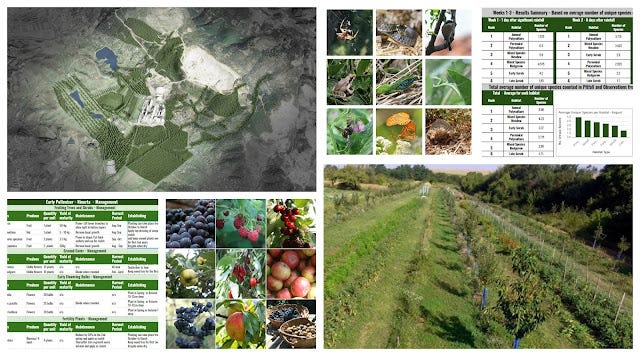
Here you can see how we use  Mahonia aquifolium - Oregon Grape along with a selection of other plants in our Early Polleniser Polyculture. We're offering all of the plants in this polyculture from our online store that you can find here.

Early Polleniser Polyculture

Wild Hyacinth - Hyacynthus sp. blooming in the gardens. Exquisite volatile organic compounds :)


the bees agree...


A range of fruit and nut trees and shrubs from the nursery potted up for our Spring Plant Sale/Open Day that is unlikely to take place this year. Maybe we'll do a drive-by plant sale. 


Phlox subulata - Moss Phlox a sun-loving ground cover with cheerful pink blossom on display in early spring. The plant can spread to form an evergreen cover in hot and dry spots around the garden. Plant out young plants approx 40cm apart and they should form a decent cover in a few years.


Hippophae rhamnoides -  Sea Buckthorn  is one of the first deciduous plants to leaf out in the spring in our gardens. A hardy shrub/tree native to Europe, provides an abundance of highly nutritious orange berries in the autumn. A member of the Elaeagnaceae family, the plant associates with Frankia bacteria to fix nitrogen from the atmosphere. Hippophae rhamnoides -  Sea Buckthorn can withstand strong winds, tolerates drought, thrives in nutritionally poor soil and its thorny branches makes this an ideal plant for a windbreak or hedging.


Regenerative Landscape Design - Online Interactive Course 


Want to learn how to design, build and manage regenerative landscapes?  Join us for our Regenerative Landscape Design - Online Interactive Course from May 1st to Sep 13th, 2023. 

We're super excited about running the course and look forward to providing you with the confidence, inspiration, and opportunity to design, build and manage regenerative landscapes, gardens, and farms that produce food and other resources for humans while enhancing biodiversity.

Regenerative Landscape Design Online Course

You can find out all about the course here and right now we have a 20% discount on the full enrollment fees. Just use the promo code
 RLD2023 in the section of the registration form to receive your discount. 

We are looking forward to providing you with this unique online learning experience - as far as we know, the very first of its kind. If you are thinking of reasons why you should do this course and whether this course is suitable for you, take a look here where we lay it all out. Looking forward to it!


Pruning the Grapevines 


I normally prune the grapevines in mid-Feb so we're running a bit late this year. Last year we had some disease on the vines so this year I pruned out a lot more of the new growth and second-year-old growth  to leave fewer buds that should have more resources, less stress and therefore more resistant to attack. We'll see.


Here's a short video that Archie made last year on grape pruning and using the prunings for hardwood cuttings. It's easy peasy. Loads more on Grapevines if you are interested in a previous post The Very Fine Grapevine - The Essential Guide to Everything you Need to Know about Growing Grapes


Formicidae - Wood Ants (Formica rufa - I think)  busy as usual. We have 4 colonies in the market garden each one approx 1m wide and 50 cm tall. If our current belief system regarding the age of things is correct, these little creatures have been on the scene for at least 92 million years. The dinosaurs went extinct 65 million years ago and us hominids have only been strutting our stuff for 6 million years with the very latest edition Homo sapiens mere noobs at just 100,000 years old. Much to learn from these OG's 


Kale and Rocket (background) microgreens in the sunroom. 100's of little plants growing in 25cm wide 45cm long and 15 cm deep trays.


Zanthoxylum piperitum - Japanese Pepper Tree trunk looking pretty sinister 


New Daily Video Series from Dylan and Archie


Dylan and Archie have been posting daily videos on what they are up to in the gardens. 
Here's a few from last week 


Good luck everyone and wishing you well.


Welcome to our Online Store where you can find Forest Garden/ Permaculture Plants, Seeds, Cuttings, Bulbs, Rhizomes and Polyculture Multi-packs along with digital goods and services such as Online Courses, Webinars, eBooks, and Online Consultancy and finally we've added a Bulk Fruit and Nut Tree order form for Farms, Orchards, Nurseries, and Large Regenerative Landscape Projects. If there is anything in the store you would like to see but is not there, please let us know. We hope you enjoy the store and find something you like :) It's your purchases that keep our Project going. Thank you. Enter Our Store Here

Plants, Seeds, eBooks, Consultancy, Bulk Fruit and Nut Tree Orders for Permaculture, Polyculture, Forest Gardens and Regenerative Landscapes.

--------------------------------------------------------------------------------------------------------------------------


Regenerative Landscape Design - Online Interactive Course 


Want to learn how to design, build and manage regenerative landscapes?  Join us for our Regenerative Landscape Design - Online Interactive Course from May 1st to Sep 13th, 2023. 

We're super excited about running the course and look forward to providing you with the confidence, inspiration, and opportunity to design, build and manage regenerative landscapes, gardens, and farms that produce food and other resources for humans while enhancing biodiversity.

Regenerative Landscape Design Online Course

You can find out all about the course here and right now we have a 20% discount on the full enrollment fees. Just use the promo code
 RLD2023 in the section of the registration form to receive your discount. 

We are looking forward to providing you with this unique online learning experience - as far as we know, the very first of its kind. If you are thinking of reasons why you should do this course and whether this course is suitable for you, take a look here where we lay it all out. Looking forward to it!

--------------------------------------------------------------------------------------------------------------------------

We offer a diversity of plants and seeds for permaculture, forest gardens and regenerative landscapes including a range of fruit and nut cultivars. We Deliver all over Europe from Nov - March. - Give a happy plant a happy home :)


Our Bio-Nursery - Permaculture/Polyculture/ Regenerative Landscape Plants 

--------------------------------------------------------------------------------------------------------------------------

Support Our Project 


If you appreciate the work we are doing you can show your support in several ways.

  • Comment, like, and share our content on social media.
  • Donate directly via PayPal to balkanecologyproject@gmail.com or via FTX Pay


--------------------------------------------------------------------------------------------------------------------------


Design and Create Webinars - Forest Gardens, Urban Gardens, Permaculture, Regenerative Farming  


We're hosting a range of online learning sessions including how to create habitat to enhance biodiversity, how to design and build a forest garden, polyculture design software tutorials, regenerative farm, and landscape design, urban gardening and much more. If you would like to be notified when our next sessions are coming up please add your email below and hit subscribe and we'll be in touch.


You can also register for our online training, services, and products directly here.

--------------------------------------------------------------------------------------------------------------------------