Monday, 14 November 2022

Polyculture Profiles - Perennial Productive Polyculture- Asparagus, Garlic Chive, Strawberry - Plutus

We have started a new section of the blog, presenting our polyculture profiles, some of which we are growing in our gardens and some of which we are planning to implement in the near future. 

We'll start with a simple 3 species, perennial polyculture that produces a bounty of asparagus for us each year provides habitat for wildlife is easy to establish, and requires relatively low maintenance. 

It will probably be helpful to look over this Polyculture Profile Layout post before or after reading, where we provide a description of the profile layout and some general notes to consider should you wish to try to grow the polyculture yourself. 


Polyculture Name - Plutus - Perennial Productive


Intro - Plutus is a three-species perennial vegetable polyculture of Asparagus officinalis - Asparagus ,Allium tuberosum  - Garlic Chives  and Fragaria x ananassa - Strawberry that we have been growing in our market garden (Aponia).

Compatible Climate (KCC) - B (with irrigation) C - D

USDA Hardiness - 5-10

Water Needs - Irrigation required for production

Light Preferences - Full Sun/Dappled Shade

Soil Preferences - light (sandy), medium (loamy) and heavy (clay) - Fertile

Suitable pH - acid, neutral and alkaline

Layout - Island - Belt - Strip - Block


Asparagus officinalis - Asparagus 'Washington' ,Allium tuberosum  - Garlic Chives  and Fragaria x ananassa - Strawberry  in the second year after planting Plutus


Overview Image


Aerial photo of our market garden (Aponia) with overlay. Plutus is located in the area circled red


Functional Components


The Asparagus can be considered the canopy in this design with Strawberry forming a ground cover to prevent weeds and the Garlic Chives planted on the south edge to take advantage of available light.

Production Potential - Asparagus can be harvested from April through to June and Garlic Chives can be cut from April-August. Garlic Chives are quite happy in dappled shade but by mid-summer the Asparagus plants can get very tall and the leaves tend to drape over the Chives. The Asparagus row that runs parallel to the chives can be contained with wires to avoid them smothering the Garlic Chives. The Strawberry ground cover will provide a small harvest of berries but nothing substantial, their main purpose being to provide ground cover. Strawberry leaves are rich in iron and vitamin C and can be harvested for teas and salads.


Habitat Potential - When left to flower Garlic Chives are extremely attractive to a range of Borgs, furthermore, the biomass cut from the Asparagus in winter and piled onto the beds as mulch provides suitable cover for many insects and spiders. We keep the bed area free from volunteer plants but encourage native growth in the pathways and alongside the edge of the beds. This wild growth provides a range of habitats for wildlife both above and below ground.

Allium tuberosum - Garlic Chives in flower in September - always attracts many species of flying insects in our gardens


Access

The polyculture is situated on a raised bed with pathways surrounding it and two keyhole paths to access the wider section of the bed. The pathways double up as irrigation channels that we flood during the dry season to irrigate the crops.

Plutus just after planting - Volunteer growth on the edge of the bed can be cut throughout the growing season providing mulch for the beds. We generally leave the wild growth untouched from Oct - March each year.

Plutus in the second year after planting out - Summer


Species List


Plutus in the second season after planting. F.vesca - Strawberry ground cover is forming well between A.officinalis -Asparagus


Maturation Phases


Planting


Example of planting distance between rows and plants


Flowering, Fruiting, and Maintenance Calendar


Regenerative Landscape Design - Online Interactive Course

Want to learn how to design, build and manage regenerative landscapes? Join us on our Regenerative Landscape Design - Online Interactive Course.

The course includes 20 lessons, with 20 hours of one-to-one mentoring/consultancy, drawn from over 20 years of experience designing, implementing and managing polyculture gardens, farms, food forests and regenerative landscapes across a variety of climate zones.
We look forward to providing you with the confidence, inspiration, and opportunity to design, build and manage landscapes that produce food and other resources for humans while enhancing biodiversity.

You can access all of the course material without the one-to-one tutoring by becoming a paid annual subscriber to our Substack, which grants you access to the Bloom Room for just 70 USD per year. Subscribe below to join now.

I look forward to having you join us!

How to establish the Perennial Vegetable Polyculture Bed


Here's how we set up the bed:

The first step was to cut the existing vegetation down and pile it next to the bed for mulch. We wait until mid-spring before cutting the existing vegetation, especially if it consists of hollow stems used by beneficial insects to lay eggs in. This gives the eggs a chance to hatch and move on to do their work in the garden.


Next, we forked over the area to relieve compaction and remove deep-rooted plants that will easily grow through a mulch. Following this we tilled the area with a Rototiller. We could have applied sheet mulch directly on top of the existing vegetation and planted in the autumn, but we had Asparagus seedlings that needed planting out so decided to go this route instead. There will probably be more weeding to do in the first year this way and we will lose some of the great natural soil structure, but it will recover by this time next year and this will be the last tilling this bed sees for a 1/4 of a century if not longer. The bed area is already quite fertile as it has been fallow for the previous 5 years with regular harvesting for hay, so we did not add any blanket application of compost.

Area rototilled using a Honda Mantis handheld machine. It took around 2.5 hrs and 300 ml of fuel to clear the area. The large clods with roots were removed by hand as they quickly clog up the tiller. Totally recommend a more powerful machine for this type of work
 

We then established the access and water channels which consist of paths/irrigation channels on either side of the bed and two keyhole paths in the wider sections of the bed. The bed is kinda pear shaped (literally). We are flood-irrigating this bed using a diverted mountain stream that runs along the pathways. Capillary rise draws the water into bed and gravity draws the water down. With the keyhole paths in place we can expect thorough infiltration of water into the bed and around the roots of the plants.

Keyhole pathways enable access into the center of the wider sections in the bed and allow water to permeate into this wider section
 

The next step is planting out. The asparagus were spaced approx. 45 cm apart and Chinese chives were planted in between the asparagus on the south edge of the bed. We then placed strawberry runners among the asparagus, the idea being to provide a ground cover and bee fodder but I'm sure we'll get a few strawberries too :) The shallow-rooted strawberries (no more than 20 cm) should not compete with the deep-rooted asparagus, the roots of which may reach depths of up to 2m. The garlic chives root in clumps around 30 - 40 cm deep.


Finally, we top-dressed each asparagus and Chinese chive with 2L of compost watered each plant well, and mulched in between the plants.

2L of compost added around the base of each plant, watered well and straw mulch applied


All in all, it took around 5 hrs for 4 of us to prepare and plant this bed and we can expect a supply of food for probably the next 25 years. With some weeding, each year and irrigation applied during dry periods it seems like time well spent :)

If you enjoyed this post, please share it :) 


Support Our Project

If you appreciate the work we are doing you can show your support in several ways.


---------------------------------------------------------------------------------------------------------------

We offer a diversity of plants and seeds for permaculture, forest gardens and regenerative landscapes including a range of fruit and nut cultivars. We Deliver all over Europe from Nov - March. - Give a happy plant a happy home :)


Our Bio-Nursery - Permaculture/Polyculture/ Regenerative Landscape Plants 

Monday, 10 October 2022

Layout and Overview of Polyculture Profiles for Permaculture, Forest Gardens, Regenerative Farms and Gardens

We have started a new section on the blog profiling polycultures that we are growing in our gardens or are intending to plant in our gardens in the near future.  

This post provides a description of the profile layout and some general notes to consider if you would like to try and grow the polycultures that we introduce. 

The polyculture plans we present are offered as a starting position as opposed to a finished article. How a polyculture performs will vary considerably from site to site due to climatic/microclimatic and edaphic factors, the plant material used, and your own establishment and management practices. 

Each polyculture is presented as follows 

But first, just to let you know about our Online Store where you can find Forest Garden/ Permaculture plants, seeds, bulbs, and Polyculture multi-packs along with digital goods and services such as Online Courses, Webinars and eBooks.  We hope you enjoy the store and find something you like :) It's your purchases that keep our Project going. You can also find our full list of trees. shrubs and herbs for forest gardens on our website here 


The Profile Layout

Polyculture Name - The working name for the polyculture and the polyculture category i.e Productive - Support or Infrastructure.

Intro - An overview stating the primary purpose of the polyculture and a brief description of the key features

Compatible Climate(KCC) - Indicates the climate zones that are suitable for growing the polyculture. Based on the Köppen Climate Classification system to indicate the climatic compatibility. In areas at higher latitudes be aware that your light levels will be lower so your canopy density should be thinner. i.e wider spacing, fewer plants. Microclimatic conditions should be well considered when assessing the compatibility of the polyculture for a site. You can find a KCC google earth overlay map here.

USDA Hardiness - Indicates the hardiness zone that the polyculture can be grown in. I have used the hardiness of the least hardy plant in the polyculture for the lower limit and often this is just one plant. For growers in colder areas, this plant (or plants) can be replaced with a hardier species that more or less match the role the plant serves so do not rule out trying a polyculture based on this information alone. You can find the individual hardiness of each plant in the species list table further on in the profile. more on plant hardiness here.

Water Needs - Indicates the general water/irrigation requirements of the polyculture

Light Preferences - Indicates the general light preferences of the polyculture

Soil Preferences - Indicates the preferred soil conditions of the polyculture. The plant combinations and spacing I am using are generally based on working in soil that is in optimal or near-optimal condition to start with as we always prepare poorer soils in advance of planting. On soils that are in moderately good condition. I’m confident these planting schemes will work.

Suitable pH - Indicates the preferred soil pH of the polyculture. All of the polycultures we grow are on soils with a pH in the range of 5.0 - 8.5

Layout - Suggests possible layout options for the polyculture based on the Spatial Layout options

Overview Image - An illustration of the design. This image often depicts the polyculture in the early stages of development and will include the broad dimensions of the design area and labeled positions of the species and features

Functional Components - Summarizes the potential functionality of the polyculture in the following areas:

  • Production Potential - Summary of production potential
  • Fertility Potential - Summary of fertility potential
  • Habitat Potential - Summary of habitat potential

Access - Describes the access within the polyculture

Species List - A table listing all of the plant species used within the polyculture, and how many of each species are required (per unit depicted), the botanic and common name, the family, USDA hardiness zone, forest garden layer, and function

Maturation Phases - An illustration of the polyculture design when initially planted and when mature. Sometimes other intervals of the growth development stages are included here

Planting - A diagram of the planting layout indicating distances between plants and planting location within the planting zone. For some polycultures, you will also find suggestions for layout variations in this section

Flower/Fruit and Maintenance Table - This table shows the flowering and fruiting times for each of the species included in the polyculture and specific maintenance tasks for each species. It also contains a section providing information on the general maintenance tasks required for the polyculture in the following categories

  • Trim and Prune - When and what to trim and prune
  • Irrigation - When to irrigate
  • Access - When and how to maintain access
  • Mulch - When and what to mulch

A word on the flowering and fruiting times on the calenders. During long cold winters in locations at high altitudes or regions of high latitudes, plants will not follow the sequence as indicated on our calendars. In our gardens at approx. 580 m above sea level on the 42nd parallel north, the calendars are an accurate representation, although there is a lot of variation within the month each year.

All establishment and maintenance information provided is based on using starter plant material i.e, rhizomes and cuttings and 1st or 2nd-year-old saplings. If you are using mature plants or older plants you need to account for differences i.e, fewer plants may be needed, more irrigation and fertility provided to support older/larger plants, and possibly staking and supports if very large plants are used. I always recommend using starter material as it will very often outperform larger plants in the long run, requires less input and attention to establish, and is significantly more cost-effective especially when planting at scale.

Aside from the essential maintenance for some of the amenity plantings and more ornamental polycultures, the level of maintenance required will always depend on the level of tidiness preferred. Generally speaking the less tidy you are the more attractive to wildlife your polycultures will be but there is merit in keeping some areas tidy, namely providing plenty of space for air circulation, allowing more even light distribution within the plant layers, and checking plants that may dominate an area thereby reducing biodiversity. It is much easier for the majority of people to connect with a garden that shows at least some order. Having beautiful, as well as productive and biodiversity-enhancing polycultures, is an important factor when recruiting and inspiring new growers.


Regenerative Landscape Design - Online Interactive Course

Want to learn how to design, build and manage regenerative landscapes? Join us on our Regenerative Landscape Design - Online Interactive Course.

The course includes 20 lessons, with 20 hours of one-to-one mentoring/consultancy, drawn from over 20 years of experience designing, implementing and managing polyculture gardens, farms, food forests and regenerative landscapes across a variety of climate zones.

We look forward to providing you with the confidence, inspiration, and opportunity to design, build and manage landscapes that produce food and other resources for humans while enhancing biodiversity.

You can access all of the course material without the one-to-one tutoring by becoming a paid annual subscriber to our Substack, which grants you access to the Bloom Room for just 70 USD per year. Subscribe below to join now.

I look forward to having you join us!

You can find the first two Polyculture Profiles in the links below. We'll be adding more to this page from time to time. 

Polyculture Profiles - Perennial Productive Polyculture- Asparagus, Garlic Chive, Strawberry - Plutus


Polyculture Profiles - Perennial Infrastructure Polyculture - Edible Hedge/Windbreak/Biomass - Terminus


Polyculture Profiles - Perennial - Productive - Production/Support - Hestia


Support Our Project

If you appreciate the work we are doing you can show your support in several ways.


---------------------------------------------------------------------------------------------------------------

We offer a diversity of plants and seeds for permaculture, forest gardens and regenerative landscapes including a range of fruit and nut cultivars. We Deliver all over Europe from Nov - March. - Give a happy plant a happy home :)


Our Bio-Nursery - Permaculture/Polyculture/ Regenerative Landscape Plants 


Saturday, 1 October 2022

Five of our Favorite Deer Resistant Plants

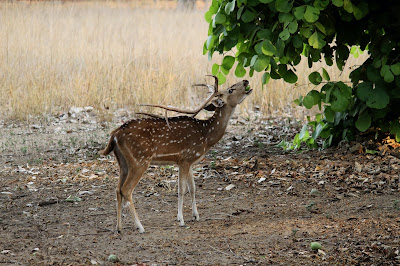
Protection from deer, is something that many growers need to consider. Deer damage on agricultural crops can have severe economic consequences, and for the forest gardener, it's essential to protect your establishing plants, as we have discovered over the years. The most effective way to prevent damage is fencing your entire site but in the event, this is not an option, there are some plants we have found to be relatively untroubled by the grazers and browsers.


During this post we'll look at five of our favorite deer-resistant plants, these plants are also largely untroubled by domestic livestock too.


Ginkgo biloba - Maidenhair Tree


Overview: Ginkgo biloba - Maidenhair Tree grows up to 30m at a slow rate. Often referred to as a 'living fossil', it has an incredible history and there is now little doubt that today's Gingko is a direct descendent of ancestors that provided food for the dinosaurs! Leaves are fan-shaped, with two lobes, that turn a stunning yellow in autumn. The species is dioecious with males often selected over females, because the fruit from female plants has a somewhat nauseous smell. It's pollinated by wind and prefers full sun. Seeds are edible. Highly valued medicinal plant.

Uses: Firewood, Pest tolerant, Ornamental, Street tree. Edible nuts

Deer Resistance Potential: Generally speaking,  Ginkgo has an excellent reputation for being deer resistant and indeed it is one plant in our unfenced gardens that do not seem to be bothered. 

Propagation: As forementioned, Ginkgo is usually propagated by cuttings. Take young or half-ripe wood about 15 cm long during May-July, put these in a frame, and keep them moist. They usually put out the best growth in their second year. Grafting is commonly practiced by nurseries to grow new Ginkgos. A Ginkgo tree in Kew gardens had a branch of a female tree grafted onto a male specimen. You can also propagate via seed. Although stratification isn't always necessary, it's likely that germination is better if the seeds experience some exposure to cold temperatures for 2 - 3 months.

It's astonishing to think that these plants may have been living and dying on this planet for the last 270 million years.  Paul found the seeds, pictured germinating here, at the base of a street tree in the center of Skopje, Macedonia.
 

Ficus carica - Common Fig


Overview: Ficus carica is a deciduous tree growing to approximately 8m at a medium rate. It's a light-demanding plant that will grow best with 8 hours or more of direct sunlight. Can grow in virtually any soil type. Figs may have single-stemmed growth or multi-stemmed shrub-like growth and often send up suckers from the base of the tree and spread branches that are low to the ground. Leaves are deeply lobed and thick.

Uses: Understory tree, Ornamental, Fruit tree

Deer Resistance Potential: Listed as being very resistant, and although some reports of damage do exist generally figs have a great reputation. The deer do not seem to enjoy fig leaves. They may enjoy the fruit, however.

Propagation: Figs are generally propagated by cuttings and for commercial plantations by tissue culture. We have had success with hardwood cuttings taken in late autumn/ early winter planted inside and outside into a free-draining medium (50% river sand 50% sieved compost).

Regenerative Landscape Design - Online Interactive Course

Want to learn how to design, build and manage regenerative landscapes? Join us on our Regenerative Landscape Design - Online Interactive Course.

The course includes 20 lessons, with 20 hours of one-to-one mentoring/consultancy, drawn from over 20 years of experience designing, implementing and managing polyculture gardens, farms, food forests and regenerative landscapes across a variety of climate zones.

We look forward to providing you with the confidence, inspiration, and opportunity to design, build and manage landscapes that produce food and other resources for humans while enhancing biodiversity.

You can access all of the course material without the one-to-one tutoring by becoming a paid annual subscriber to our Substack, which grants you access to the Bloom Room for just 70 USD per year. Subscribe below to join now.

I look forward to having you join us!


Japanese Pepper Tree - Zanthoxylum piperitum


Overview: Zanthoxylum piperitum  is an incredible plant that can be grown as a spiny shrub or a small tree, reaching dimensions of 3m by 2m. It is pretty robust, and drought tolerant, and copes with full sun, partial shade, and even some deeper shady conditions, making it a fantastic tree for a forest garden. It's easily grown in a variety of soil types and can tolerate very cold temperatures. Flowers are borne in June and seeds can be harvested in September - October. 

Uses: Great lower canopy tree for a forest/woodland garden. The plant has extensive medicinal value with all parts of the plant having a specific use.  Ground and dry-roasted fruit is an ingredient of the Chinese 'five spice' powder. Harvesting the tree for seeds starts once we see the black seed emerging from some of the husks.  We usually cut the whole umbel off and if all the seeds don't pop out easily just leave it to dry until the separation process becomes easier. The husks can be put into a pepper mill and used as you would black pepper, although a little more sparingly as the taste produces a clove-like numbing as well as a deliciously unique flavor.
 

Deer Resistance Potential: This is one of the only plants that has grown well in areas we have been planting that are visited by deer as well as goats, horses, sheep, and cows. These mammals obviously do not appreciate the impactful flavor of this famous Chinese spice. The thorns are also a great deterrent. 

Propagation: If the ground the beneath the tree is relatively free of grasses and other plants, the seedlings will emerge. Every year since the plant has been producing seeds, we grow between 10 - 15 plants this way. Sowing the harvested seeds will produce more success with seeds collected in the autumn and sown immediately producing the best results (although some years the germination rates are very low). Cuttings of half-ripe wood, July/August in a frame. Root cuttings, 3cm long, planted horizontally in pots in a greenhouse.

Elaeagnus angustifolia - Russian Olive


Overview: Elaeagnus angustifolia - Russian Olive is a deciduous Shrub growing to 7 m at a medium rate. Its ability to grow in nutritionally poor soil, and tolerate drought and maritime exposure means it is very versatile, and it can make an excellent hedging plant. The rounded form requires pruning to maintain. The species is hermaphrodite and is pollinated by bees. It can fix Nitrogen.

Uses: Hedge, Ornamental, Companion plant

Deer Resistance Potential: Mixed reviews, although the other attributes of E.angustofolia may mean it's worth experimenting with growing it as part of a polyculture hedge.

Propagation: Stored seed can be very slow to germinate, often taking more than 18 months. Ifyou harvest your own seed and sow in the autumn you should be able to bypass the dormancy and receive good germination results in the first season . Cuttings are a more reliable method. Cuttings of half-ripe wood, around 7 - 10cm are recommended.


Pieris japonica - Lily of the Valley Bush


Overview: Pieris japonica - Lily of the Valley Bush is an evergreen shrub growing 4m by 4m at a slow rate.  Its leaves are tough and evergreen and should be protected from drying winds to help prevent leaf damage. It's in bloom from April to May with attractive clusters of spring flowers, The species is hermaphrodite and the flowers are sweet smelling, but the plant is poisonous. Suitable for all soil consistencies, but prefers acidic, damp, and well-draining soil conditions. 

Uses: Border, Screen/hedge, Specimen, Woodland garden.

Deer Resistance Potential: Rated as quite high as deer tend to stay away from them unless absolutely pushed. 

Propagation: Easily propagated by seed. Surface sow in the spring and when large enough prick out and pot on and grow them on before planting out into their permanent positions.


Here is a list of deer-resistant plants we have available in the nursery this year. Click on the plant names for plant profiles.


Here is a list of some (reportedly) deer-tolerant trees and shrubs

Deer Tolerant Trees, Shrubs and Herbs
Latin NameCommon NameHardiness USDATolerance Rating
Acer palmatumJapanese Maple6 - 82
Acer rubrumRed Maple4 - 102
Achillea filipendulinaYarrow
Achillea millefoliumYarrow3 - 91
Aconitum sp.Monkshood
Ageratum houstonianumAgeratum
Albizia julibrissinSilk Tree6 - 92
Allium sp.Onion
Amelanchier laevisAllegheny Serviceberry4 - 91
Amelanchier laevisAllegheny Serviceberry
Antirrhinum majusSnapdragon
Arisaema triphylumJack-in-the-pulpit
Armoracia rusticanaHorseradish
Artemisia dracunculusTarragon
Artemisia sp.Silver Mound
Asarum canadenseWild Ginger
Asimina trilobaPapaw5 - 81
Asparagus officinalisAsparagus
Aster sp.Aster
Astilbe sp.Astilbe
Berberis sp.Barberry
Betula nigraRiver Birch3 - 92
Borage officinalisBorage
Buddleia davidiiButterfly Bush4 - 82
Buddleia sp.Butterfly Bush
Buxus sempervirensCommon Boxwood
Cactaceae sp.Cactus
Calendula sp.Pot Marigold
Caryopteris clandonensisBlue Mist Shrub
Centaurea cinerariaDusty Miller
Centaurea cyanusBachelor’s Buttons
Cleome sp.Spider Flower
Colchicum sp.Autumn Crocus
Consolida ambiguaLarkspur
Convallaris majalisLily of the Valley
Coreopsis verticillataThreadleaf Coreopsis
Cornus masCornelian Cherry4 - 83
Corydalis sp.Corydalis
Cytisus scopariusBroom5 - 81
Cytisus sp.Broom
Daphne sp.Daphne
Dicentra spectabilisBleeding Heart
Digitalis purpureaCommon Foxglove
Diospyros virginianaAmerican Persimmon4 - 82
Dryopteris marginalisWood Fern
Echinacea purpureaPurple Coneflower
Echinops ritroSmall Globe Thistle
Elaeagnus angustifoliaRussian Olive2 - 71
Endymion sp.Bluebell
Eranthus hyemalisWiner Aconite
Euphorbia marginataSnow-on-the-Mountain
Euphorbia sp. (except ‘Chameleon’)Spurge
Fagus grandifoliaAmerican Beech4 - 82
Fagus sylvaticaEuropean beech4 - 72
Festuca glaucaBlue Fescue
Ficus caricaCommon Fig6 - 111
Fritilaria imperialisCrown Imperial, Fritilia
Galanthus nivalisSnowdrops
Ginkgo bilobaMaidenhair Tree3 - 81
Gypsophila sp.Baby’s Breath
HelichrysumStrawflower
Heliorope arborescensHeliotrope
Helleborus sp.Lenten or Christmas Rose
Hyssopus officinalisHyssop
Ilex opacaAmerican Holly
Ilex verticillataWinterberry Holly
Iris sp.Iris
JuniperusJuniper
Koelreuteria paniculataGolden Rain Tree5 - 82
Lantana sp.Lantana
Lavandula angustifoliaLavender5 - 92
Lavandula sp.Lavender
Limonium latifoliumStatice
Lobularia maritimaSweet Alyssum
Marrubium vulgareHorehound
Melissa officinalisLemon Balm
Mentha sp.Mint
Monarda didymaBee Balm
Myosotis sp.Forget-Me-Not
Myrica pensylvanicaBayberry
Narcissus sp.Daffodil
Nepeta sp.Catmint
Ocimum basilicumBasil
OsmundaFern
Pachysandra terminalisPachysandra
Paeonia sp.Peony
PapaverPoppy
Perovskia atriplicifoliaRussian sage4 - 92
Perovskio atriplicifoliaRussian Sage
Picea glaucaWhite Spruce2 - 62
Picea glauca ‘Conica’Dwarf Alberta Spruce
Pieris japonicaJapanese Pieris4 - 71
Pimpinalla anisumAnise
PinusPine
Pinus nigraAustrian Pine3 -71
Pinus resinosaRed Pine3 - 71
Pinus thunbergianaJapanese Black Pine6 - 91
PotentillaCinquefoil
Pseudotsuga menziesiiDouglas Fir3 - 62
Ranunculus sp.Buttercup
Rhus aromaticaFragrant Sumac
Rosmarinus officinalisRosemary
Rudbeckia sp.Black-Eyed Susan3 - 9
Ruta sp.Rue
SalixWillows
Salvia officinalisGarden Sage
Sambucus racemosaAmerican Red Elder4 - 82
Stachys byzantinaLamb’s Ear
Syringa vulgarisCommon Lilac
Tanacetum vulgareTansy3 - 92
Tanacetum vulgareCommon Tansy
Teucrium chamaedrysGermander
Thumus sp.Thyme
Viburnum dentatumArrowwood Viburnum
YuccaYucca
Yucca spp.Yucca5 - 61
ZinniaZinnia


 To be clear, no plants are 100% deer-proof. When close to starvation deer have been known to eat almost anything. Deer resistance means that these plants are less likely to attract deer and if deer are in the vicinity and there are other plants around available, these plants will likely be left alone. 


You will likely find there are also great variations in terms of people's experiences with which plants are affected. For example, an apple tree may fall victim to deer predation in one garden, but be largely ignored in another, if there is a tastier and more accessible option nearby for the deer.  As with most things garden-related, there are many influencing variables. The heaviest browsing by deer in our area will occur during difficult winter months but generally speaking deer are most active from October through February.

That's all for this post. If you know of some deer-resistant plants not in the lists above please let us know in the comment section below. 

Support Our Project

If you appreciate the work we are doing you can show your support in several ways.


---------------------------------------------------------------------------------------------------------------

We offer a diversity of plants and seeds for permaculture, forest gardens and regenerative landscapes including a range of fruit and nut cultivars. We Deliver all over Europe from Nov - March. - Give a happy plant a happy home :)


Our Bio-Nursery - Permaculture/Polyculture/ Regenerative Landscape Plants