Apricots, are easy to grow, thriving in a variety of climates and providing a delicious source of food that can be eaten fresh and dried, perhaps offering one of the finest dry fruits. We love these trees in our gardens as they provide a great source of fruit right through July just after the Cherries and Mulberries have finished and just before the Plums and Figs are ripe. The plants are one of the most beautiful in the Prunus genus, with their heart-shaped leaves, not to mention the beautiful pink and white blossom displays very early in the Spring. As if that is not enough of a reason to grow these majestic plants, Apricot fruits provide a great source of vitamins, minerals, and other nutrients to keep you super healthy.
During this post, we’ll take a close look at these incredible plants, including how to grow them, their many uses, and growing apricots in polycultures and permaculture landscapes. Finally we'll introduce some excellent cultivars that we are offering from the nursery this season.
Apricot belongs to the Prunus genus, which also includes cherries, peaches, plums, and almonds, sometimes referred to as the stone fruits. There are a number of cultivars of apricot trees that have been developed over the years, each with its own unique characteristics. There are also quite a few different species some of the most common including the Siberian apricot (Prunus siberica), the Japanese apricot (Prunus mume), and the European apricot (Prunus armeniaca). Prunus armeniaca is the most commonly cultivated apricot species.
While researching the different species and types of apricots and where they come from, it became clear very quickly that it's complex and messy. To make things even more complicated hybridisors have created what is known as a "black apricot" or "purple apricot", (Prunus dasycarpa), a hybrid of an apricot and the cherry plum (Prunus cerasifera) and other apricot–plum hybrids are variously called plumcots, apriplums, pluots, or apriums.
In 1583 a Neapolitan scientist Gian Battista Porta describes the cultivation of this fruit in Southern Italy, and divides apricots into two major groups:
I could not find any modern reference to this division but the stone's clinginess to the fruit is a characteristic often noted within the descriptions of the many cultivars available. Freestone refers to the stone coming away easily from the fruit flesh, Clingstone refers to the stone holding onto the fruit flesh.
For the rest of this post, we'll focus on the most widely cultivated Apricot - Prunus armeniaca
Apricot - Prunus armeniaca
Latin name - Prunus armeniaca
Common name - Apricot, Armenian plum, Armenian peach, and Chinese plum
Family - Rosaceae
History - Apricots have been cultivated for thousands of years, probably as far back as 3000 BC. The exact origin of the apricot is not known, but it is believed to have originated in the region around present-day Armenia (hence the Latin name reference). From there, it spread to other parts of Asia, including China, India, and Japan. Apricots were cultivated widely during the classical period and likely introduced to the Romans by the Greeks that would have received them from trade and travel along the silk road from Asia. The greeks referred to them as the “golden eggs of the sun.”
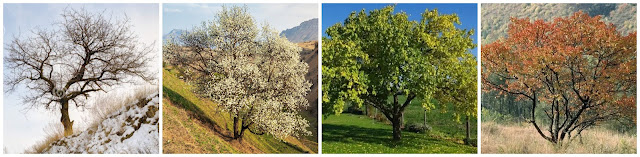 |
| Four seasons of a mature Apricot tree |
The presence of apricots is documented as far back as the 1st century AD in the writings of Pliny the Elder where he talks of the fruits being grown in the fertile soils around the volcano, Vesuvius in Italy. It was in fact, the eruption of this Volcano in AD 79 that claimed Pliny the Elder's life, along with all those Apricot trees I presume.
 |
| Depiction of the Vesuvius eruption by William Marlow |
This Volcano has erupted another 30 times since 79 A.D., most recently from 1913-1944. Throughout this period Apricots have continued to be cultivated in the area and it is thought that one of the first varieties to be cultivated on Italian soil still grows there today where there are still 2,000 hectares of apricot trees grown around Vesuvius. It's an active volcano, and it's certain to erupt again. They must be some adorable Apricots!
In the centuries that followed, the apricot tree was introduced all over Europe and then to the Americas, where it quickly became a popular fruit.
Growing range - Today, apricot trees are grown in many parts of the world, including Europe, Asia, Africa, North and South America, and Australia. Warm and sunny weather is necessary for good yields of ripe fruits. The plants will not grow well in overly cloudy areas with short summers but warm weather is not enough. Apricots also require winter chill between 350- 500 hours 0°- 7°C, this is essential for flower and fruit formation. The plants are well-suited to temperate climates, specifically Mediterranean and continental climates with long hot summers and dry cool winters. They are not suitable for sub-tropical and tropical climates.
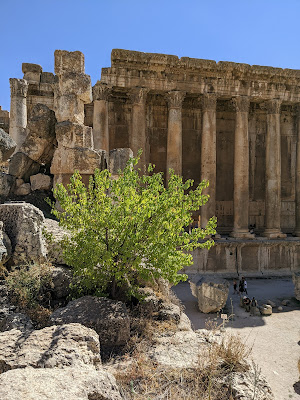 |
| A young Apricot tree growing among the ruins of Baalbek, Eastern Lebanon. |
Worldwide 4,083,861 tonnes of apricot is produced per year. It's interesting to observe that the bulk of the fruit is still grown in the native region of the plant. Turkey is the largest apricot producer in the world with 846,606 tonnes of production per year. Uzbekistan comes second with 536,544 tonnes of yearly production. With 329,638 tonnes of production per year, Iran is the third largest producer of apricot. European production is mainly from Italy, Spain, France, and Greece and the plant is grown extensively throughout North Africa
I did find a link to a podcast titled growing Apricots in Alaska but have not got around to listening.
Here it is in case you are interested
Description - The Apricot is a small tree, 8–12 m (26–39 ft) tall, and has a dense, spreading canopy of up to 8m wide.
The leaves are ovate, 5–9 cm (2.0–3.5 in) long, and 4–8 cm (1.6–3.1 in) wide, with a rounded base, a pointed tip, and a finely serrated margin.
The flowers are 2–4.5 cm (0.8–1.8 in) in diameter, with five white to pinkish petals; they are produced singly or in pairs in early spring before the leaves. The fruit is a drupe (stonefruit) similar to a small peach, 1.5–2.5 cm (0.6–1.0 in) diameter (larger in some modern cultivars), from yellow to orange, often tinged red on the side most exposed to the sun; its surface can be smooth (botanically described as glabrous) or velvety with very short hairs (botanically: pubescent).
Apricot cultivars can be grown on a variety of rootstocks that will result in smaller trees (see grafting and cultivars section below)
Sexual Reproduction - Apricot trees reproduce sexually through the process of pollination. In order to produce fruit, apricot trees must be pollinated by bees or other insects that transfer the pollen. Apricot has hermaphroditic flowers, both male and female reproductive organs on the same flower. As with all fruit pollination, pollen from the male part of the flower must be applied to the stigma -- the female part of the flower, in the center of the blossom -- while it is receptive. The amount of time the stigma remains receptive varies with the weather, but it is typically receptive 12 to 48 hours after the blossom opens. If the weather is hot, which isn’t likely during the time of year apricot trees bloom, the receptive period is shorter than it would be if the weather were cooler. Once the pollen reaches the female reproductive organs, it fertilizes the ovules, which then develop into seeds. These seeds are encased in the fruit that we eat, and when the fruit is ripe, the seeds can be dispersed and can grow into new apricot trees.
.png)
Light Preferences - Apricots prefer full sunlight and require at least 6-8 hours of direct sunlight per day in order to grow and produce fruit. In general, apricot trees should be planted in an area of the garden that receives plenty of sunlight, with no trees or other structures that could shade the tree and limit its exposure to the sun. Apricot trees can also be grown in pots or containers, as long as they are placed in a sunny location where they can receive enough light to thrive.
Water needs - The plants are drought tolerant but as with the majority of fruits, regular and reliable watering is required in order to grow and produce good-quality fruit. In general, apricot trees should be watered deeply and consistently, providing them with enough moisture to support healthy growth. However, it is important not to over-water apricot trees, as this can lead to root rot and other problems. The best way to water an apricot tree is to provide it with a deep, thorough watering once a week during the dry season and high summer when the fruits are developing.
Habitat and Biodiversity - Apricots can attract a variety of wildlife to the garden. The flowers of the apricot tree are a popular source of nectar for bees and other pollinators, which are essential for the production of fruit. The early flowering period makes these plants, particularly important support for bees and other pollinators.
Additionally, the fruit of the apricot tree is a favorite food for birds, such as robins, thrushes, and finches, which help to disperse the seeds and ensure the continued growth and reproduction of the tree. At commercial scale birds can be a serious pest destroying large quantities of crops but we have never had any significant damage to crops via birds. Apricot trees can also provide shelter and habitat for other animals, such as squirrels, and other small mammals. Overall, apricot trees can be an important part of a healthy and diverse ecosystem, supporting a wide range of wildlife and helping to maintain a healthy and balanced ecosystem.
Hardiness - USDA 5-9. The tree is slightly more cold-hardy than the peach, tolerating winter temperatures as cold as −30 °C (−22 °F) or lower, if healthy.
Winter Chill - After apricot trees drop their leaves and enter dormancy, they must accumulate hours of low temperatures 32°- 45°F or 0°- 7°C throughout the winter months. This is known as their winter chill requirement. The cold weather slowly breaks down the growth inhibitors in the apricot tree's vegetative and flower buds, readying them for another season’s growth. With their chill requirements met, apricot buds stay in a resting state until warm spring weather signals them to start growing. The number of hours depends on the cultivar but it seems the vast majority require between 350 to 500 chill hours. some may need up to 1000 chill hours.
Where to Plant
Climatic Limitations - In general, apricot trees prefer warm, dry climates and do not do well in extremely cold or wet conditions. Saying that we have been growing them successfully in Shipka, Bulgaria, Southeast Europe
Koeppen- Geiger Climate (KCC) where we experience cold snaps in March and April with frosts as late as May. With good cultivation selection and sitting the trees in optimal locations, we manage to get a good yield of fruits in most seasons.
Soil - the plant prefers well-draining soil that is rich in organic matter and has a neutral to slightly acidic pH. They also require good drainage in order to prevent waterlogging. In general, apricot trees do not do well in heavy, clay soils that retain moisture, as this can lead to root rot. It's possible to grow them in clay soils as long as the drainage is adequate.
Location - Apricot trees require plenty of sunlight and will not grow well in shady areas. On a windy site choose an area sheltered from the wind. This will also likely improve productivity as flying insects will be more active during flowering periods, leading to better fruit settings. In cooler climates, planting nest to sun-facing walls can help prevent blossom damage and hasten fruit ripening but the roots can be quite aggressive and planting close to weak walls or foundations may cause problems further down the line.
For the best yields of fruit, two cultivars that flower at the same time are recommended. Planting trees on semi-standard rootstocks 5.5 - 7.5 m apart (18 - 25 ft) will most likely ensure cross-pollination. If you are short on space, no problem, apricot trees can be grown successfully in containers too.
Pollination/Fertilisation - Although most apricot cultivars are self-fruitful, meaning flowers from the same tree pollinate one another, the trees are more productive when cross-pollinated. Cross-pollination describes the process of the transfer of pollen between two cultivars of a plant, in this case between two cultivars of Apricot - Prunus armeniaca. This is achieved with the assistance of insects and for cross-pollination to occur, both apricot cultivars should be in flower at the same time.
Even when two or more apricot trees are planted, cross-pollination may not occur if the trees are too far apart. Planting trees 5.5 - 7.5 m apart (18 - 25 ft) will most likely ensure cross-pollination.
Weather presents the biggest obstacle to apricot tree cross-pollination. Apricot trees are very early to bloom in spring, and a late frost can damage their flowers enough to disrupt pollination. Windy, rainy, and frosty weather sharply curtails bee activity.
Feeding, Irrigation, and Care
Feeding - Once the tree is planted adding 20 L compost or other organic matter to the surface every spring will maintain good soil health and support the tree's growth.
Planting - It is best to plant in well-prepared soil high in organic matter with good structure and drainage. This will help to create a healthy, fertile environment for the tree to grow and produce fruit.
Weeding - Grasses growing around a newly planted tree will compete for water so it's a good idea to keep under the trees clear from grasses. As the tree establishes and develops sinker roots and a wide spreading network of roots that accumulate water from a wider area, the grass will not be such a problem.
Pruning - In general, apricot trees should be pruned in late winter or early spring, before the tree begins to bud and produce leaves. This will allow you to see the tree's structure clearly and make pruning decisions more easily. Formative pruning, when the plants are young will help reduce regular pruning later in the tree's life. This includes removing branches growing inwards or crossing over other branches. The goal is for the tree to have an open center, with a central trunk and several main branches that form a vase-like shape.
This will help to ensure that the tree has good air circulation and is able to support the weight of the fruit and allow light to the inner parts of the tree, promoting healthy growth and fruit production. Following this as the trees mature, removing dead or diseased branches will promote healthy growth and fruit production.
Harvesting - Apricots are typically ready to be harvested in July. The exact timing of the harvest will depend on the cultivar and the climate in which it is grown. In general, apricots are ready to be harvested when they are soft to the touch and have a deep, rich color. The fruit will also have a sweet, fragrant aroma when it is ripe.
To determine if the fruit is ready to be harvested, you can carefully test a few apricots by gently pressing on them with your thumb. If the fruit gives slightly and feels soft, it is ready to be picked. It is best to harvest apricots in the morning, when they are cool and fresh, and to use them as soon as possible for the best flavor and texture.
Propagation - Unlike many fruit trees in the Prunus genus, Apricots can be propagated by several different methods, including, hardwood cuttings, rooting cuttings, layering, and seed germination.
- Cuttings are lengths of stem usually taken from the previous year's growth of an established tree. Cuttings are taken in late winter or early spring and rooted so that they produce a whole new tree. the cutting will produce the same fruit as the tree you took it from.
- Layering involves encouraging the roots of an existing tree to grow into a new plant. To do this, choose a healthy branch of the tree and bend it down to the ground, making sure to leave a few sets of leaves on the branch. Then, use a sharp knife or pair of scissors to make a shallow cut in the bark of the branch, where it touches the ground. Cover the cut area with soil and water it well, and the branch should begin to develop roots within a few weeks. Once the roots are well-established, the new plant can be carefully cut away from the parent tree and transplanted into a pot or into the ground.
- Seed germination. Sow the seeds and keep moisture levels consistent (like a wrung-out sponge) Once the seedlings have developed several sets of leaves, they can be transplanted into larger pots or into the ground.
- Grafting - The most common way to propagate Apricot cultivars is by grafting and this gives you the certainty that the fruit will be the same as the cultivar is known for, as well as some control on what size the plant will be, i.e by using dwarf semi-standard or standard rootstocks. The below table list some common semistandard rootstocks used for Apricots
- Apricot has been successfully grown on several rootstocks including Torinel, Nemaguard, Nemared, Lovell, Mariana 2624, and Citation. Nemaguard (seedling peach rootstock) and Citation are the most common rootstocks used in commercial apricot production in California. Rootstocks can also influence the plant's susceptibility to common diseases and tolerance for certain soil tryps for example the Nemaguard rootstock is highly resistant to root-knot nematode and results in a plant that is fairly tolerant of waterlogged soils
Irrigation - If summer brings about 25mm or 1 inch of rainfall every 10 days you won’t need to irrigate. But if it gets dry in the summer, you want to give Apricots a thorough soaking. Once every 10 days or two weeks is plenty as long as you are soaking the ground really well so that the water drains way down to the roots. We'll often plant in depressions (planting dish) and empty a 20L bucket into the dish to absorb into the soil slowly. Running a hose in the planting dish with a slight trickle will also work well. Demand for water increases to maximum just prior to the fruits ripening which is late June in our area, conveniently when we get our highest rainfall.
Potential Problems - The main problems you will likely face growing Apricots will be when growing them in areas with lots of cloudy days and short summers and/or areas with very cold periods during the early Spring
- Apricot flowers emerge early in the season and are sensitive to frost and can be damaged by late frosts, which can kill the flowers and young fruit as they are developing. Heavy rain can also damage the flowers. If hard rain is expected during bloom, covering trees with a large tarp can prevent damage.
- A lack of natural pollinators due to low biodiversity in the region or due to bad weather conditions during flowering times may prohibit cross-pollination. Lots of habitat for bees, flies, butterflies, and wasps will ensure a good apricot harvest. (see our Early Polleniser Polyculture for some great plants for early pollination)
- In some seasons"over-pollination" can be a problem. In an attempt to mature too many fruits for the available resources, a high proportion of fruit is undersized. This is more of a problem for commercial growers where the equal size and weight of each fruit are important. Heavy fruit sets can also result in physical damage to the trees. Blossom pruning or removing fruitlets early in the season can help prevent this.
Pests and Disease - Apricots are largely untroubled by pests and disease as long as they are provided with adequate water and grown in fertile soils. When not cared for properly the plants will be stressed and like all organisms, will be vulnerable. Probably the most common issue will be birds eating the fruit but depending in what area you are growing in you may find some fungal and bacterial issues too. You can find a good overview of Apricot pests from
Utah University here.
Apricot Uses
Fruit - There is a lot of variation in flavor depending on the cultivar you select but in general the flesh will be succulent or dry and the taste ranges from sweet to tart. You can pick the fruit unripe and it will take 1 to 2 days on a counter to ripen. Once ripe, apricots last another 1 to 2 days at room temperature or 3 to 5 days in the fridge. They are one of the best fruits for drying and the best news is, drying apricots does not affect their nutritional value. They offer the same benefits as fresh ones and make excellent snacks, great chopped up and added to muesli that can be stored for long periods of time. Spraying some lemon juice on the apricots before drying them prevents the apricots from browning. (see below for full instructions on how to dry Apricots). The fruits can also be used for jams, competes, juice, and when fermented wines and liqueurs. Apricot fruits make a pretty good Rakia too.
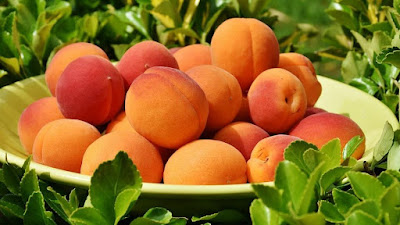
The nutritional composition of apricot fruits is approximately (per 100 g): 85% water, 2700 1.U. vitamin A, 0.6 mg Niacin, 1.0 g protein, 0.03 mg vitamin B1, 17 mg Calcium, 0.2g fat, 0.02 mg vitamin B2, 23 mg Phosphorus, 12.8 g carbohydrate, 10 mg vitamin 0.5 mg Iron, 1.0 mg Sodium, 281 mg Potassium.
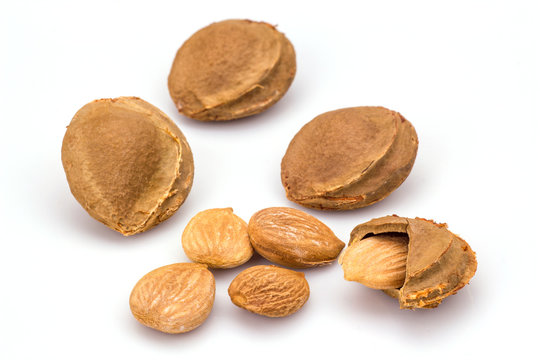
The seed of the fruit is protected by a husk and within the husk is the kernel. The kernel is a valuable by-product of the fruit and can be either sweet or bitter. A sweet kernel can be used like almonds and have a similar taste. Bitter kernels are not edible but can be used for oil extraction resulting in Apricot kernel oil that is high in oleic and linoleic acids and is an important commercial commodity.
Wood - Apricot wood is used for turned objects, musical instruments, carvings, and knife handles. Apricot tends to be assigned to smaller, more decorative purposes as the wood size is limited. For more info on Apricot wood see the
Wood Database.
Leaves - Apricot leaves can be used as supplementary cattle feed as well as for goats and rabbits. A green dye can be obtained from the leaves.
Biodiversity - The early flowering of these plants provides an excellent source of early forage for pollinating insects. They would make a great addition to an
Early Polleniser Polyculture
Ornamental - Being one of the first trees to blossom in the spring they add great aesthetic value to the ornamental garden, brightening up the treescape with gorgeous pink/white blossoms. To visit the wild Apricot woodlands of Northwest China in early spring is high on my travel wishlist!
Medicinal uses - Various parts of the plant are used medicinally to treat a wide range of diseases, including respiratory, gynecological, and digestive disorders and for their antipyretic, anti-inflammatory, hepatoprotective, vulnerary, anthelmintic, and anticancer properties. We've never used Apricots medicinally for anything specific and not sure how effective it is as medicine to treat the above-mentioned.
Yields - The fruit yield for mature apricot tree ranges from 10 to 100 kg per tree, depending on the cultivar. For young trees (less than 6 years), fruit yield is between 3 and 25 kg per tree
Known Hazards - Like the majority of Prunus species, Apricots produce hydrogen cyanide, a poison that gives almonds their characteristic flavor. This toxin is found mainly in the leaves and seed and is readily detected by its bitter taste. Usually present in too small a quantity to do any harm, any very bitter seed or fruit should not be eaten.
Apricot Polycultures/Permaculture
We use Apricot in our polycultures often. Being sun-loving they require a position in the Upper Canopy. but we find you can fit a number of herbs and fruiting shrubs under and around the plants especially so if you lift some of the lower-growing branches.
Apricot in a Polyculture Orchard
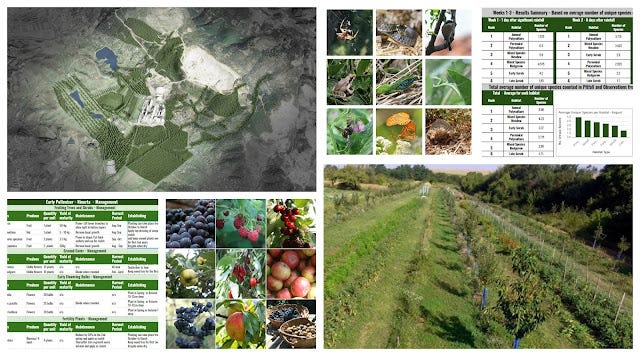
We have Apricots included in a four-layer productive polyculture in one of our Polyculture Trial gardens. The purpose of the polyculture is to provide a succession of fruits and nuts for our team and to study the invertebrate associations within the herb layer. The polyculture is composed of two 1m wide beds that include a Canopy, Shrub, Herb, and Bulb layer. Between the planting beds are 3m wide alleys of mixed species meadow plants.
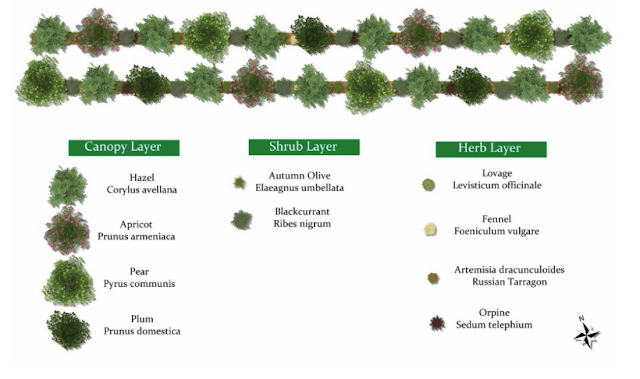 |
A 46 m long section of 2 beds. The alley of grassland in between the beds makes up a total area of 230 m2. The planting pattern is modular and can be extended vertically and horizontally to include more beds and alleys for broad-scale application. |
Here is the full species list for the Dionysis polyculture
To ensure the Apricots are cross-pollinated well we included 3 different cultivars 'Early Kishinevska', 'Markuleshti' and 'Modesto' (more on these cultivars below)

Regenerative Landscape Design - Online Interactive Course
Want to learn how to design, build and manage regenerative landscapes? Join us on our Regenerative Landscape Design - Online Interactive Course.
The course includes 20 lessons, with 20 hours of one-to-one mentoring/consultancy, drawn from over 20 years of experience designing, implementing and managing polyculture gardens, farms, food forests and regenerative landscapes across a variety of climate zones.
We look forward to providing you with the confidence, inspiration, and opportunity to design, build and manage landscapes that produce food and other resources for humans while enhancing biodiversity.
You can access all of the course material without the one-to-one tutoring by becoming a paid annual subscriber to our Substack, which grants you access to the Bloom Room for just 70 USD per year. Subscribe below to join now.
I look forward to having you join us!
We always include a variety of Allium bulbs in all fruit tree underplanting. Growing Alliums around apricots and other members of the Prunus genus is thought to keep borer insects away which may bore into the tree causing disease. They also serve well to suppress weed. You can find a variety of
Alliums we plant here.
We have a few of our Apricot trees in raised beds in the home garden where we stock most of the mother plants for our nursery. We are planning to propagate from the Apricots via root cuttings and hardwood cuttings keeping the trees small to provide some shade to the other nursery plants in the raised beds. In our climate too much high summer sun is often a problem in our gardens.
We've been experimenting with ground covers at the base of the trees, which have been working well so far.
Symphyotrichum ericoides - White heath aster and Delosperma cooperi - Pink Carpet are particularly good. Within the ground cover, we plant a variety of bulbs that flower throughout the season for short periods including low-growing
Allium moly - Golden Garlic.
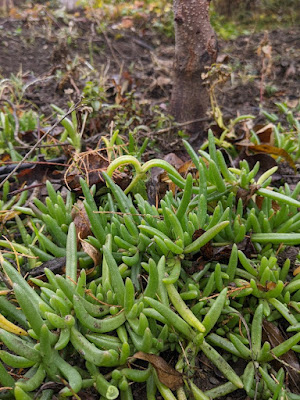 |
| Delosperma cooperi - Pink Carpet in the first winter after planting and already providing some great ground cover. |
We also have an Apricot as one of our upper canopy fruit trees in a small Forest Garden Design. This garden is located near other Apricot trees growing around the garden so we have not included a pollinator partner in the design.
More on this garden can be found here
Apricot Cultivars
Here is a selection of cultivars that we are growing in our gardens and offer from our Nursery. We selected these cultivars for their high yields, excellent taste, and resistance to disease and pests.
Apricot - Prunus armeniaca - 'Early Kishinevska'
Apricot - Prunus armeniaca - 'Hungarian'
Apricot - Prunus armeniaca - 'Albena'
Apricot - Prunus armeniaca - 'Kostyudzhenska'
Apricot - Prunus armeniaca - 'Modesto'
Apricot - Prunus armeniaca - 'Markuleshti'
All of the cultivars are 17 EURO per tree. All orders over 500 EURO receive a 10% discount and we can also provide bulk orders of 100 plants or more for heavily discounted prices. If you would like to place an order send us an email at balkanecologyproject@gmail.com or contact us on Whatsapp at +359988342649 with your order. We look forward to hearing from you.
How to Dry Apricots
Drying apricots is a simple process that can be done at home with a few basic tools.
- The first step is to wash and dry the apricots, then cut them in half and remove the pits. Freestone cultivars are very easy to work with.
- Next, place the apricot halves on a baking sheet and put them in the oven set to the lowest possible temperature (usually around 65 -90 Celsius or 150-200 degrees Fahrenheit).
- Leave the apricots in the oven for about 8-12 hours, or until they are dry and leathery.
- To check for doneness, remove one of the apricots from the oven and let it cool. If it is dry and pliable, the rest of the apricots are ready.
- Once the apricots are completely cool, they can be stored in an airtight container and will keep in great quality for six months. After opening, you may wish to store them tightly sealed in the refrigerator to preserve the quality for up to six additional months.
It's worth noting that the vast majority of dried apricots (and other dried fruits) available in stores are sprayed with Sulfur dioxide a type of sulfite. For some people, even small amounts of sulfite can wreak health havoc on your health. The fruits are often sundried in areas with long hot summers and sprayed a number of times both to preserve and maintain an orange color. Always best to grow your own.
Support Our Project
If you appreciate the work we are doing you can show your support in several ways.
We also have a range of seeds, tubers and cuttings available all year round - delivery worldwide.
References


.jpg)


.png)


.png)






-page-001.jpg)